Flora and Fauna of Saudi Arabia

In this blog, I provide an overview of the Flora and Fauna of Saudi Arabia. I suspect that most people have an image of Saudi as being a harsh, barren, desert wilderness (for good reason, I might add). The reality is rather more complex and nuanced. Saudi has very different types of landscape, for example vast desert plains, mountain ranges, escarpments and coastal regions, much of which is staggeringly beautiful. Within these very different landscapes, a range of flora and fauna not only survive, but indeed thrive.   

Edge of the World

Flora

Studying the flora of Saudi Arabia is a daunting task because of the vast size of the country. The general pattern of vegetation is increasingly understood, but an understanding of the exact distribution of the many species of flowering plant is still nascent. Approximately 3,500 species of plant have been recorded with nearly 1,000 of these species found in the southwestern region of Asir due to its relatively higher rainfall. Plants, in general, are xerophytic and mostly consist of dwarf shrubs and small herbs. There are few species of tree with ‘Date Palms’ being abundant in many parts of the Kingdom.

Wadi Rum

The east of Saudi Arabia often receives ‘Mediterranean depressions’ from November onward. The arrival of rain enables perennial plants to produce new shoots and the seeds of annual plants to germinate. These annuals grow rapidly completing their life cycle within a few weeks. By April/ May, the annuals will have flowered, seeded and died, and the perennials returned to a state of dormancy.

In desert areas, plant growth is mostly confined to geographical depressions, known as ‘wadis’.

Wadi Hanifa near Riyadh

The Rub’ al Khali desert has very little plant diversity, with about thirty-seven species of flowering plant recorded here, seventeen of which are only found around the fringes of the desert. There are virtually no trees, and the plants are adapted for desert life and include dwarf shrubs such as ‘Calligonum crinitum’ and ‘Saltbush’ and several species of ‘Sedge’. Around the fringes of the desert area are open woodlands with ‘Acacia’ and ‘Prosopis cineraria’.

Prosopis Cineraria grow around the fringes of deserts

The Asir Mountains in the southwest of Saudi and most of the western highlands of Yemeni border support a distinct flora which resembles that of East Africa. The highest parts are covered with cloud forests, southwestern Arabian montane woodlands which includes, on north-facing slopes, ‘Juniperus procera‘ and ‘Euryops arabicus’, draped with the lichen ‘Usnea articulata’, and on south-facing slopes, dwarf shrubs such as ‘Rubus petitianus’, ‘Rosa abyssinica’, ‘Alchemilla crytantha’, ‘Senecio’ and ‘Helichrysum abyssinicum’, with ‘Aloe sabae’ and ‘Euphorbia’ in the driest locations. Lower down, below 2,500m there are evergreen woodland and scrub dominated by ‘Olea Europaea Subsp’, ‘Cuspidata’ and ‘Tarchonanthus camphoratus’. Below 2,000m the vegetation is deciduous scrub-land with ‘Acacia’, ‘Commiphora‘, ‘Grewia‘ and succulent plants.

Asir Mountains

Located in the Ha’il Region, the Jabal Aja protected area situated in the Aja mountains is noted for its flora.

Jabal Aja – Aja Mountains

Jabal Aja has been designated an important area because of the richness of its plant life and the presence of many endemic and relict plant species. The Jabal Aja reserve offers refuge to plants from the Mediterranean and Irano-Turanian regions in an area that otherwise forms part of the greater Saharo-Arabian Region. Approximately 355 species of plant have been recorded in the Reserve, including the plants found in the adjoining desert area of An Nafud.

The plains have deep sandy-loam soils, and the dominant plant is ‘Haloxylon salicornicum’, with the desert ‘Gourd’ being common and ‘Asphodelus tenuifolius’ occurring in geographical depressions. The annual plants ‘Stipa tortilis’, ‘Picris cyanocarpa’ and ‘Anthemis’ appear after rains. On the thin slopes below the rocks, ‘Acacia gerrardii’ is dominant and is accompanied by other woody shrubs such as ‘Searsia’, ‘Periploca’, ‘Gymnocarpos’ and ‘Ephedra foliata’. In the wadis and runnels, more ‘Acacia gerrardi’ grows, along with ‘Lycium shawii’, ‘Pulicaria undulata’, ‘Ochradenus baccatus’ and ‘Zilla spinosa’.

Fauna

The fauna of Saudi Arabia has been more actively studied than the flora, not least because of interest in the larger mammals for the purpose of hunting and shooting. Birds and butterflies have also been studied, but less is known about other members of the animal kingdom. 

Some of the larger mammals include the ‘Dromedary Camel’, the ‘Arabian Tahr’, the ‘Arabian Wolf’, the ‘Arabian Red ‘ and ‘Fennec’ Foxes, the ‘Caracal’, the ‘Striped Hyena’, the ‘Sand Cat’, the ‘Rock Hyrax’, and the ‘Cape Hare’. However, habitat destruction, hunting, off-road driving and other human activities have led to the local extinction of the ‘Striped Hyena’, the ‘Golden Jackal’ and the ‘Honey Badger’ in some localities. The Asir Mountains is where the critically endangered ‘Arabian Leopard’ is still to be found, and the broader region is also home to the ‘Hamadryas Baboon’ with colonies reaching as far north as Baha, Taif, and the suburbs south of Mecca.

Arabian Fennec Fox

The ‘Arabian Oryx’ used to roam over Saudi Arabia’s deserts and much of the Middle East, but by 1970, it had been hunted to extinction in the wild. However, a captive breeding programme had been initiated at the Phoenix Zoo in the United States in the 1960’s, and the ‘Oryx’ has since been successfully reintroduced into the wild in the Mahazat as-Sayd protected area in Saudi Arabia, a fenced reserve of over 2,200km2. It is also now present in the Uruq Bani Ma’arid protected area, where the ‘Goitered Gazelle’ and ‘Mountain Gazelle’ are also to be found.

The Sand Cat, which is the only member of the cat family to live exclusively in             deserts, can be found in the western region of Saudi Arabia. Its paws are covered with thick hair to protect it from the hot ground, although it is essentially nocturnal.

Arabian Sand Cat

Najd and Tabuk are where the ‘Arabian Wolf’ can be found. It is a solitary hunter and is persecuted by livestock owners. Only 2000 to 3000 animals are left in the wild putting them on the endangered animals list.

Arabian Wolf

Birds native to Saudi Arabia include ‘Sandgrouse’, ‘Quails’, ‘Eagles’, ‘Buzzards’ and ‘Larks’ and on the coast, Seabirds include ‘Pelicans’ and ‘Gulls’. The country is also visited by migratory birds in spring and autumn including ‘Flamingoes’, ‘Storks’ and ‘Swallows’. ‘MacQueen’s Bustard’ is a resident species that are dependent on good vegetation cover, often being found in areas with dense scrubby growth with shrubs such as ‘Capparis spinosa’. The cliff faces of the Asir Mountains provide habitat for the ‘Griffon Vulture’, the ‘Verreaux’s Eagle’ and the small ‘Barbary Falcon’, and the juniper woodlands are home to the ‘Yemen Linnet’, the ‘Yemen Thrush’, the ‘Yemen Warbler’ and the ‘African Paradise Flycatcher’. The ‘Hamerkop’ nests in the Wadi Turabah Nature Reserve, the only place on the Arabian Peninsula at which it is found.

Hamerkop

The political and economic landscape of the Kingdom of Saudi Arabia

At the conclusion of almost 30 years of sporadic and intermittent war covering most of the Arabian Peninsula, HRH King Abdulaziz Ibn Abdulrahman Al-Faisal Al-Saud, known as Ibn Saud, established the modern state of Saudi Arabia in 1932 by the enactment of Royal Decree No. 2716. The Kingdom of Saudi Arabia is an absolute Islamic monarchy that has been ruled by the Saud family since its creation. The King, also known as the ‘Custodian of the two Holy Mosques’, is the head of state; Prime Minister; President of the Council of Ministers and supreme commander-in-chief of the armed forces.

The Government in Saudi is comprised of two councils: The Council of Ministers; and the Al-Shura Council. The Council of Ministers is comprised of twenty-two Government ministers and is responsible for the administrative affairs of the entire country. The appointment and removal of Ministers is the King’s sole prerogative, each of whom serves a four-year renewable term by royal decree.

The Al-Shura Council is a 150-member advisory body used as a consultative forum by the King and Council of Ministers in reviewing new and existing legislation and recommending changes. Female citizens have been allowed to participate as members of the Al-Shura Council since 2013 and there are currently twenty-one female members. The Al- Shura Council has thirteen sub-committees covering a wide range of issues such as: Islamic and judicial affairs; security affairs; human rights and petitions; social, family and youth affairs and economic affairs. As with the Council of Ministers, members are appointed and removed from the Al-Shura council by royal decree.

In 1992, a provincial council system was introduced which created thirteen administrative provinces throughout the country, with powers limited to decision-making on local issues such as street maintenance and refuse collection. Each province has a Governor appointed by the King. The first provincial council elections were held in 2005 whereby male citizens elected fifty per cent of the members of each provincial municipal council and the Minister of Municipal and Rural Affairs appointed the remaining fifty percent. In 2011, it was decreed that female citizens would be allowed to participate in the next municipal council elections which were held in December 2015. Twenty female citizens were elected out of the 2,100 seats contested nationally.

The Government’s power is bound by the Basic Law (Shari’ah Law) tradition and the need to retain a consensus among the royal family and tribal and religious leaders. The Basic Law, a constitution like charter, reaffirmed Saudi’s status as an Islamic monarchy and in so doing formalised its system of government. Shari’ah is the paramount body of law comprising a collection of fundamental principles derived from different sources including: The Holy Quran; the Sunnah (the sayings of the Prophet Mohammed) together with the works of Shari’ah scholars.

Law is also derived from legislation enacted by the Government in its various forms which include Royal Decrees, Royal Orders and Resolutions and Circulars of the Council of Ministers. All such Government enacted laws cannot conflict with, and are ultimately subject to the Shari’ah and although the legal system, and judiciary, are independent of Government and administered by the Ministry of Justice, judges are also bound by Sharia laws.

The Saudi economy has many contrasts and contradictions. For example, it is the 19th largest economy in the world, a member of the G20 with a per capita Gross Domestic Product (GDP) of USD24, 000 putting on a par with Saudi Korean and a head of Portugal and yet it is classified as a ‘developing’ country by a number of international institutions. This includes the International Monetary Fund and the United Nations, using criteria such as: gross national income; political rights and civil liberties; poverty; human development and press freedom. A developing country is also defined as having a population with a low standard of living, a less developed industrial base and a relatively low human development index.

Up to mid 2014, GDP was growing at an average rate of around 3%, with inflation fluctuating between 2.6% and 3%. The table below provides a summary of Saudi’s economic performance based on 2014 data.

Economic Indicators KSA Economic Performance (2014)
Real GDP USD 800 Billion
GDP Rate of growth 3%
Rate of inflation ~ 2.9%
Saudis out of work 660,000
Unemployment rate 12%
Net Government liquid financial assets +USD900 billion
Share of GDP ~ 120%
Annual fiscal Balance -USD17 Billion
Share of GDP -2.3%

Economic Performance Data (2014).

Since September 2014, however, the economic performance of the Saudi economy declined sharply. This is partly as a result of the drop in oil prices, falling from USD100 per barrel in September 2014, to a low of under USD26 per barrel in February 2016.

The Saudi economy is hydrocarbons-based. It owns approximately 25% of the world’s confirmed oil reserves and it is also the leading oil exporter globally from which the Government derives 90% of its revenues and 45% of the country’s GDP. The Government uses these revenues from its state-owned oil enterprises to fund the transformation and modernisation of its economy in a long standing and increasingly desperate attempt to diversify its economic activity and reduce the reliance on oil.

The public sector dominates economic activity. Approximately 70% of Saudis are employed by the state compared with 30% by the private sector, whereas approximately 70% of the private sector workforce is expatriates. Saudis constitute two-thirds of the population of the country, but less than half of the workforce. This imbalance in the economy has resulted in high levels of unemployment amongst young Saudi’s and is regarded by the Government as major a problem resulting in the launch of a programme of Saudisation known at ‘Nitaqat’, in 1995. According to the Nitaqat Labour Law, 75% of employees in private sector companies must be Saudi. The Ministry of Labour, however, enforces a watered down form of this legislation requiring companies employing twenty or more staff to work towards a Saudisation quota of 35%.


The geography of Saudi

Image result for saudi arabia end of the world
Edge of the World – Saudi Arabia

Saudi Arabia is located in the southwest of Asia and forms a bridge between the three continents of Asia, Africa and Europe. Saudi is bordered by the Arabian Gulf, Bahrain, Qatar and United Arab Emirates to the east, Oman and Yemen to the south, Jordan, Iraq and Kuwait to the north and the Red Sea to the west. The country is comprised of five geographical regions which are sub-divided into thirteen administrative provinces. Its topography is harsh and arid comprising mountains, large escarpments and plateaus, valleys, wide planes together with the three great deserts of An Nafud; Ad Dahna and Rub’ al Khali (Kabasakal & Bodur, 2002), where summer temperatures regularly reach 50 degrees Celsius. 

Occupying nearly 2,150,000 square kilometers’ Saudi is the largest country in the Middle East region and the thirteenth largest globally. It is also the largest country in the world without a river. By population it is the forty seventh largest country in the world with an estimated total population of approximately 28.4 million, 19.5 million of who are Saudi nationals of which 49.5% are females and 50.5% are males and approximately 8.9 million are foreign national’s resident in Saudi Arabia. Approximately 83% of the population lives in the major urban conurbations of Riyadh in the centre of the country; Al-Khobar and Dammam in the East and the cities of Makkah and Jeddah in the West.

A summary of key formation describing Saudi is provided below:

  • Official Name: Al-Mamlaka al-Arabiya as-Saudiya – Kingdom of Saudi Arabia.
  • Language: Arabic.
  • Religion: Islam.
  • The majority of the people adhere to a theological interpretation of Islam most commonly known as Salafism or Wahhabism. Approximately 10% of the Saudi population follows the Shia branch of Islam.
  • Currency: Saudi Arabian Ryal (SAR). The SAR exchange rate is pegged to the US Dollar (USD) at a fixed exchange rate of 3.75 SAR to 1 USD.
  • Capital: Riyadh (population in 2018: 6.2 million)
  • Head of State and Prime Minister: King Salman bin Abdul-Aziz, also known as the Custodian of the two Holy Mosques.
  • Geographical Regions. There are five geographical regions: Middle Region; Western Region; Eastern Region; Southern Region and the North Region.
  • Administrative Regions: The five geographical regions are sub-divided into thirteen administrative provinces: Jawf, Bahah, Asir, Eastern Province, Ha’il, Jizan, Madinah, Makkah, Najran, Northern Borders, Qasim, Riyadh, and Tabuk.
Image result for administrative map of saudi arabia
The thirteen administrative regions of Saudi Arabia

A brief regional history

The Middle East is one of the most diverse and fascinating regions in the world, with a rich history, proud cultures and ancient traditions of hospitality that frequently humble the Western visitor. It is at once the birthplace of Islam, one of the world’s great religions, and home of the Arabs, 360 million people spread across 21 countries and two continents, united, with few exceptions, by faith and the Arabic language. Rich in energy resources, occupying a strategic position between East and West and modernising at a giddying pace, it is a region that cannot and should not be ignored.

It may be helpful for visitors to the Middle East, and those who will be living and working here for some time, to know something of the region’s history which, to a greater or lesser extent, informs attitudes, behaviour and culture to this day.

Fourteen hundred years ago, a new, world-changing religion was born in the depths of the Arabian Desert. Within only years of the Prophet Mohammed uniting the pagan Arab tribes under the banner of Islam – meaning submission to the will of God – Arab horsemen were surging forth from the Arabian Peninsula, spreading their faith into the heart of today’s Middle East and across North Africa.

The early rise of Islam is an astonishingly dramatic story. By the middle of the eighth century, little more than a century after the Prophet Mohammed’s death in 632, the Dar al Islam, or Muslim lands, stretched from the shores of the Atlantic in West Africa and Al Andalus (Spain and Portugal) to the snowy peaks of Afghanistan and Central Asia.

The explosive growth of Islam in its first century set the scene for the high-point of Arab culture and greatness, which can be traced back to Baghdad in the eighth and ninth centuries. During this time, successive caliphs of the Abbasid dynasty held sway over most of what we call the Middle East today. The military preeminence of this Islamic empire was only part of the story. It was an extraordinary period of literary and scientific invention which underpinned one of the most sophisticated civilisations in human history.

The most brilliant minds of their generations made massive strides in the fields of mathematics, music, medicine, science, theology, history, poetry, philosophy, astronomy, even cookery writing. As the historian Karen Armstrong wrote, “Arab Muslims now studied astronomy, alchemy, medicine and mathematics with such success that, during the ninth and tenth centuries, more scientific discoveries had been achieved in the Abbasid Empire than in any previous period of history.”

The greatest Arab dynasty came crashing to a bloody end in 1258, when Hulagu, grandson of the ferocious Mongol warlord Genghis Khan, swept into Baghdad, slaughtered its inhabitants and reduced the city to ruins. Arab power in the Middle East, in time, came to be usurped by the rise of the Ottomans, a new dynasty that dated to the turn of the fourteenth century. By 1517, Makkah and Madinah acknowledged Ottoman power. By the mid-sixteenth century, other traditionally Arab lands, including Iraq, bowed to their Ottoman masters whose empire was headquartered in distant Istanbul.

From the Arab perspective, the Ottoman rule of almost half a millennium ushered in a long period of foreign occupation that continued well into the twentieth century. Fellow Muslims they might have been, but Arabs they were not. The traditional view of Ottoman history, increasingly challenged by modern historians, is that this was a protracted period of stagnation for the Middle East. The final collapse of the disintegrating Ottoman Empire at the end of the First World War threw the region into turmoil. In the wake of T.E. Lawrence’s adventures in the Arabian Desert (Lawrence of Arabia), France and Britain moved in as kingmakers. New borders were drawn, and new countries were born following the Cairo Conference of 1921.

It is worth noting that whereas the British consider Lawrence, a wartime hero, in the Middle East he is looked upon more as the foreign intelligence officer who betrayed the Arabs, the man who failed to deliver the promise of Arab independence. Understandably, given the Arabs’ long and troubled experience dealing with the leading nations of the world, foreign powers, interests and influences are viewed through different, non-western prisms.

Independence and, for a while, pan-Arabism, changed the face of the Middle East from the 1950s, starting with President Nasser of Egypt, though neither developments were sufficient to bring the long-hoped-for development and prosperity for many Arab nations. For much of the past half century, a series of wars, particularly the Arab-Israeli conflict, has threatened the region’s stability and economic progress.

After decades at the centre of international affairs, often for the wrong reasons, the Middle East continues to draw the world’s attention. During the past decade, the spectre of terrorism has damaged the Middle East’s reputation, often unfairly and inaccurately. The western media tends to draw a portrait of the region that is at once distorting and oversimplifying.

Today, the Middle East finds itself in the spotlight once again through the dramatic uprisings of what has come to be known as the Arab Spring. This term itself is another indication of the media’s unrealistic characterisation of the region, describing momentous events that are likely to usher in an era of change that may take an entire generation, rather than a season, to unfurl. While there has been turbulence in a number of countries, the situation in Saudi Arabia remains fairly benign. It is an interesting time to be in the Middle East.

The Journey Begins

Welcome and thanks for joining me!

“Four things support the world: the learning of the wise, the justice of the great, the prayers of the good, and the valor of the brave” — Prophet Mohammed

Image result for saudi arabia

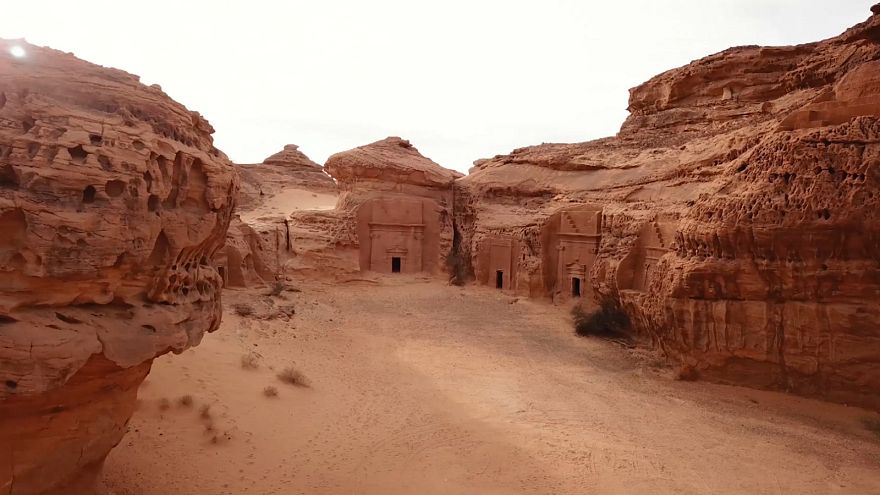
Mada’in Saleh (also known as Al-Hijr) is located in the Al-Ula Region in the Al-Madinah Province

The first observation to make about Saudi Arabia is that it is the birthplace of Islam. Home to the two Holy Places of Makkah and Madinah, it has a uniquely holy heritage shared by no other Arab nation. This is no minor distinction. It means that certain Islamic strictures, such as the prohibition of alcohol, are treated extremely seriously. Saudi Arabia is officially dry with strict punishments for those caught breaking the law. Sharia law is energetically enforced. Although foreigners tend to be spared its most zealous interpretations, there is certainly no guarantee of this, and you should at all times avoid activities that may be common in the West but are illegal here.

The second thing to note is that Saudi Arabia is one of the few countries in the world to be named after its ruling family. This is, literally, the Arabia of the Al Sauds. Again, this is an important point. The house of Al Saud’s pre-eminence is based on a long-lasting alliance with the ulama, or religious clergy, in which the Muslim clerics have always supported Al Saud rule in return for the dynasty’s endorsement of a conservative brand of Islam. Often called Wahabism, this creed of Islam was named after Mohammed ibn Abdul Wahab, the Arabian reformer who succeeded in restoring a “purified” version of the religion in the early eighteenth century. As a general rule, you should not offer any negative comments on the monarchy, royal family or Muslim clerics, whatever the context. Politics here is personal, royal and religious.

Certain things follow from this. The traditional Islamic separation of the sexes is actively followed here. Controversially, until very recently, women were not allowed to drive. As stated earlier, sharia law, which traces its roots to the earliest days of Islam, is the prevailing legal code. You should be aware of the strength of Saudi Arabia’s religious heritage and Islamic identity in all aspects of your behaviour. In practice, this should not prove particularly inconveniencing. More often than not, it will merely require discretion and thoughtfulness in one’s interaction with Saudis.

At the risk of generalising, Saudis are a distinctly proud and private people. The illustrious role their country played in the foundation of Islam, together with its central position within the Muslim world that continues to this day, is one reason for such pride. Another is Saudi Arabia’s legendary wealth, which was only relatively recently discovered. The country enjoys a highly significant geopolitical role because it has the world’s largest oil reserves and is the world’s largest oil exporter. With a population of 26 million, of which around six million are non-citizens, Saudi Arabia is a genuine heavyweight. Quite rightly, Saudis take great pride in their young country’s achievements.

Arabs take time to get to know and develop solid friendships with foreigners, this is especially true of Saudis, who can at times appear distant, possibly aloof and somewhat reticent. Bear this in mind when developing a business relationship. Patiently building up mutual understanding and trust is absolutely vital if you are to be well regarded as a business partner and will result in lasting friendships.